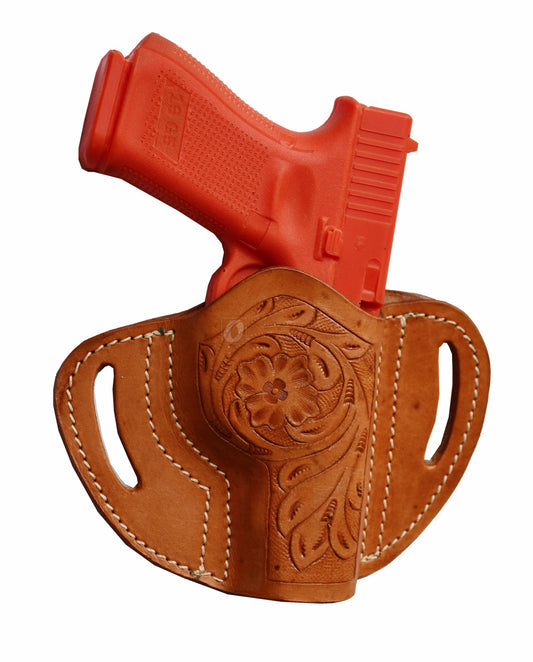
Holsters for Training: Which Type Is Best for Your Practice Sessions?
Holsters for Training: Which Type Is Best for Your Practice Sessions?
Choosing the right holster for training starts with understanding how you carry your firearm. Whether you practice at a shooting range, attend a firearm safety course, or want to become more familiar with your everyday carry setup, your holster should provide secure retention, consistent positioning, and reliable trigger guard protection.
Inside-the-waistband (IWB), outside-the-waistband (OWB), and crossdraw holsters each offer different advantages. Leather holsters can also be suitable for regular practice when they are properly fitted, structurally sound, and designed for the specific firearm.
Why Choosing the Right Training Holster Matters
A training holster should support safe, consistent firearm handling. An unstable holster, loose belt, or poorly fitted design can shift during movement and make handling less predictable.
When evaluating a holster for practice, consider these essential characteristics:
- Firearm compatibility: The holster should be designed for the exact firearm model and configuration.
- Trigger guard coverage: The holster must protect the trigger from unintended contact.
- Secure retention: The firearm should remain properly seated during ordinary movement.
- Stable belt attachment: The holster should remain in a consistent position without excessive shifting.
- Structural integrity: The holster must maintain its shape and should not have damaged or collapsing material near the opening.
- Comfort: The design should remain practical for the wearer's intended carry position.
Comparing the Best Holster Styles for Training
IWB Holsters: Familiarity With Concealed Carry
An inside-the-waistband holster positions the firearm between the waistband and the body. This design is commonly associated with concealed carry because clothing can cover much of the holster and firearm.
For people who regularly carry IWB, using the same properly fitted equipment during supervised practice can help them become familiar with its positioning, retention, and interaction with everyday clothing.
Best suited for: Familiarity with concealed-carry equipment and daily wear.
OWB Holsters: Accessible Positioning for Range Practice
Outside-the-waistband holsters attach to the exterior of a belt. Their accessible positioning and generally comfortable fit make them a common choice for recreational shooting, organized range sessions, and firearm training courses.
OWB designs are available in different ride heights, cant angles, and retention configurations. The appropriate choice depends on firearm compatibility, comfort, and the rules of the training facility.
Best suited for: Range practice, open carry familiarity, and introductory firearm handling courses.
Leather Holsters: Traditional Construction and Everyday Comfort
Leather is a holster material rather than a separate carry position. A leather holster can be designed for IWB, OWB, or crossdraw use.
Well-constructed leather holsters offer a traditional appearance, comfortable contact with the body, and a degree of flexibility as the material breaks in. Properly shaped leather can provide secure firearm retention, but the fit and condition of the holster must be evaluated regularly.
Leather can soften and change shape with prolonged use. A holster that becomes excessively loose, loses its structural integrity, or allows material to interfere with the trigger area should be removed from service.
Best suited for: Shooters who prefer traditional leather construction and a comfortable everyday carry setup.
Crossdraw Holsters: An Alternative Carry Position
A crossdraw holster positions the firearm on the opposite side of the body from the user's dominant hand. Some people prefer this arrangement for seated comfort or particular mobility needs.
However, crossdraw is not suitable for every training environment. The position can create muzzle-direction concerns during firearm handling, and some ranges or instructors restrict its use.
Always follow the range's safety rules and consult a qualified instructor before using a crossdraw holster during organized training.
Best suited for: Individuals who prefer cross-body positioning and whose training environment permits this carry style.
How to Choose a Holster for Safe, Consistent Practice
Match the Holster to Your Firearm
A holster should be selected for the specific firearm rather than relying on broad compatibility claims. Frame dimensions, barrel length, sights, and installed accessories can affect fit and retention.
Before using any holster, confirm that the firearm seats correctly and that the trigger guard remains fully protected.
Use a Supportive Leather Belt
A properly fitted belt helps keep the holster in its intended position. A belt that twists, stretches excessively, or allows the holster to move can reduce comfort and stability.
Choose a belt with suitable width, thickness, and construction for the holster attachment and the weight of the equipment.
Inspect Leather Holsters Regularly
Check the leather, stitching, belt slots, retention features, and holster opening for signs of wear. Pay particular attention to softened or deformed material near the trigger guard.
Do not continue using a holster that no longer securely retains the firearm or maintains adequate trigger protection.
Follow Established Firearm Safety Procedures
Practice should take place in an appropriate environment under applicable range rules. For handling exercises without live ammunition, verify that the firearm is unloaded, remove live ammunition from the practice area, and follow the guidance of a qualified instructor.
Keep your finger away from the trigger during handling and holstering. Never force a firearm into a holster or rush the reholstering process. Clothing, straps, and other objects must not enter the trigger guard.
Build a Stable Carry Setup
A reliable training setup involves more than choosing a holster. The firearm, holster, belt, and intended carry position should work together.
Explore our leather holster collection for traditional carry options, compare crossdraw leather holsters for alternative positioning, and browse handcrafted leather belts to support a stable carry setup.
Helpful Guides to Dial In Your Carry
For more information about everyday holster positioning and equipment compatibility, explore these related guides:
Which Holster Is Best for Your Training Needs?
There is no single holster style that works best for everyone. IWB holsters support familiarity with concealed-carry equipment, OWB holsters are practical for many range environments, and crossdraw holsters provide an alternative position where permitted. Leather construction can be suitable across these styles when the holster is properly fitted and maintained.
The best choice is one that securely fits your firearm, protects the trigger, remains stable on your belt, and complies with your training facility's requirements.
Explore our handcrafted leather holsters to find a design suited to your firearm and preferred carry position.
Frequently Asked Questions About Training Holsters
Is an IWB or OWB holster better for training?
OWB holsters are commonly used during organized range training because of their accessible positioning. IWB holsters may be more appropriate when the goal is familiarity with an everyday concealed-carry setup. Always follow the instructor's and range's requirements.
Are leather holsters suitable for regular firearm training?
Yes. A properly fitted leather holster can be suitable for regular practice when it provides secure retention, complete trigger guard protection, and adequate structural support. Inspect it frequently for wear or deformation.
Should I practice with the same holster I use for everyday carry?
Using the same properly fitted equipment can help maintain familiarity with its positioning and retention. However, certain training facilities require specific holster designs, so always follow their safety policies.
Do training holsters need additional retention?
Retention requirements depend on the activity, environment, and instructor's rules. Some courses require active retention systems, while others permit suitable passive-retention holsters. In every case, the firearm must remain securely seated during normal movement.
Can I use a crossdraw holster at a shooting range?
Some ranges permit crossdraw holsters, while others restrict them because of muzzle-direction concerns. Confirm the facility's rules and obtain qualified instruction before using this carry position.