How to Spot Fake Leather Belts: A Quick Guide to Authenticity
How to Spot Fake Leather Belts: A Quick Guide to Authenticity
Why Telling Real Leather From Fake Really Matters
On the surface, most belts look similar. But there’s a big difference between a genuine leather belt and a cheap synthetic one. Real leather lasts longer, breaks in better, and carries that timeless look you want in a men’s belt, women’s belt, cowboy belt, or Western work belt. Knowing how to spot fakes helps you avoid wasting money and disappointment later.
The Core Idea: Trust the Details, Not Just the Label
Fake leather can copy the look from a distance, but it almost always fails on the close-up details—grain, smell, feel, stitching, and how it reacts to wear. When you slow down and check a belt properly, it gets much easier to tell real from fake.
How to Spot Fake Leather Belts
1. Start With the Price
If the belt is advertised as “real leather” but priced like a disposable accessory, be careful. Genuine full-grain or top-grain leather costs more to produce. A very low price on a “premium” Western belt or cowboy belt is a red flag.
2. Look Closely at the Grain
Real leather has natural variation: tiny pores, small marks, and uneven grain. No two areas look exactly the same. Fake leather often has a perfectly repeated pattern and a plastic-like surface. When you inspect a belt up close and the grain looks too perfect, it’s probably synthetic.
3. Use the Smell Test
Genuine leather has a warm, earthy smell that’s hard to fake. Synthetic belts usually smell like chemicals, rubber, or plastic. When in doubt, hold the belt close and take a slow sniff—real leather smells natural, not artificial.
4. Feel the Surface
Authentic leather feels soft, flexible, and slightly warm to the touch. It will flex and give a little when you press it. Fake leather often feels stiff, overly smooth or shiny, and sometimes a bit “cold.” A real leather uniform belt or casual belt should feel alive in your hands, not like a sheet of plastic.
5. Examine the Edges
Edges say a lot. Genuine leather belts usually have clean, finished edges or a natural cut that still looks solid and dense. Many fake belts show fraying, rough sealed plastic, or layers separating. If the edge peels or looks like it’s made of multiple glued layers, that’s a warning sign.
6. Read the Markings, Then Verify
Labels like “genuine leather,” “full-grain,” or “top-grain” are helpful, but they can be faked too. Use them as a starting point, not proof. Always combine the label with grain, smell, and feel checks before you trust it.
7. Light Water Test (Optional)
On a small, hidden part of the belt, a tiny drop of water can tell you a lot. Real leather will slowly absorb a bit of water and darken slightly before drying. Fake leather usually lets water bead on top. Use this carefully—too much water isn’t good for any leather.
8. Check the Stitching
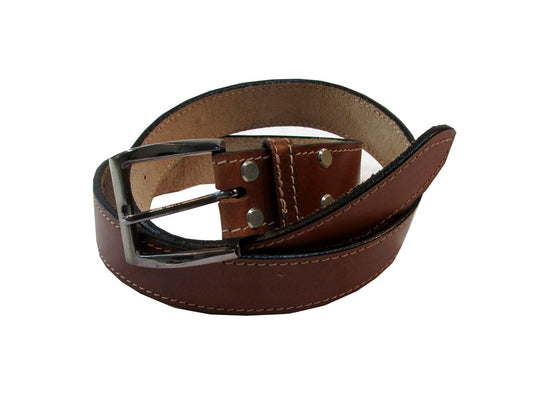
High-quality leather belts have tight, even stitching with strong thread. On good Western belts and cowboy belts, stitching usually looks neat and deliberate. Fakes often have crooked lines, loose threads, or weak stitches that scream “rushed production.”
9. Flex and Bend the Belt
Gently bend the belt. Real leather will show soft creases but won’t crack. Over time, it develops a natural patina. Fake leather is more likely to crease sharply, crack, or show surface breaks when flexed, especially near the buckle holes.
10. Heat and Wear Clues
With regular use, real leather softens and becomes more comfortable. Light warmth from your body makes it more supple. Synthetic belts tend to stay stiff or become brittle with time. If a belt feels the same “plastic stiff” after months of wear, it probably isn’t real leather.
Collection Links
Want to skip the guessing and go straight to trusted leather?
Leather Belts | Leather Holsters | Leather Knife Sheaths
Helpful Leather Belt Guides
These belt guides help you go beyond “is it real” and into choosing, sizing, and caring for your belt the right way:
- Leather Belt Sizing – How to Find Your Perfect Fit
- How to Spot a High-Quality Leather Belt
- Caring for Your Leather Belt – Tips for Longevity and Maintenance
- Leather Belts as Gifts – Why a High-Quality Belt Makes a Memorable Present
Recommended Belts You Can Trust
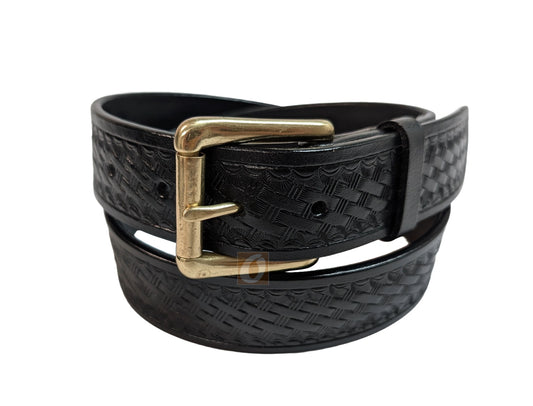
- Black Basket-Tooled Uniform Belt – a solid everyday and Western-inspired option with real leather construction.
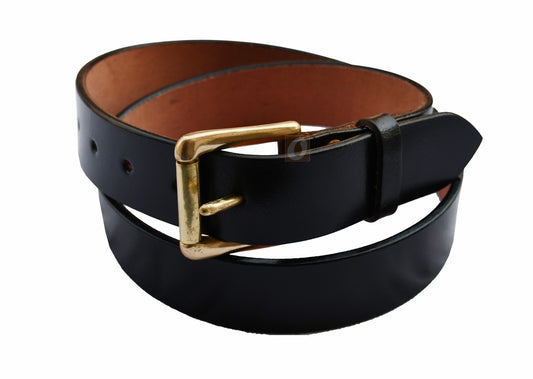
- Plain Black Formal and Office Belt – clean, reliable, and ideal for business or dress wear.
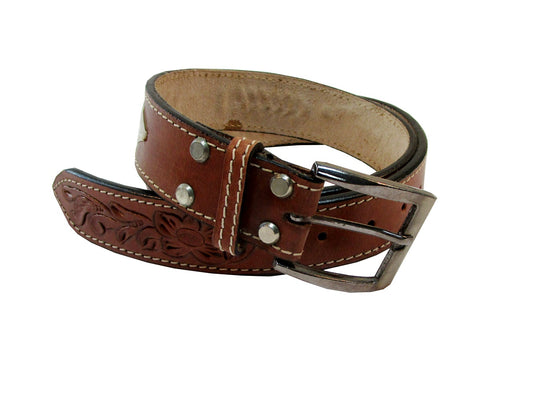
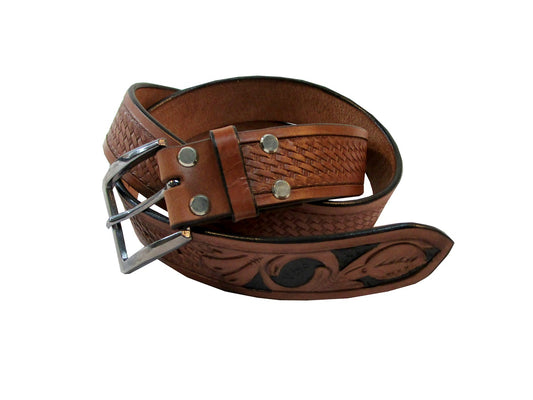
- Floral Painted Western Cowboy Belt – detailed tooling and painted finish for true Western style.
Final Thoughts
Real leather belts are worth it—but only if you actually get the real thing. When you slow down and check the grain, smell, feel, edges, and stitching, spotting fake leather becomes much easier. Whether you’re buying a school belt, a uniform belt, a women’s belt, or a cowboy belt, a few quick checks can save you from cheap imitations and help you invest in something that will age well and stay in your rotation for years.
FAQ
Can fake leather look like real leather at first?
Yes. Many synthetics are designed to copy the look, which is why checking smell, feel, and grain up close matters.
Is “genuine leather” always good quality?
Not always. “Genuine leather” can be a lower grade. Full-grain and top-grain are stronger indicators of higher quality.
Does real leather always absorb water?
It will usually absorb a small amount and darken slightly, but you should still avoid soaking any leather belt.